


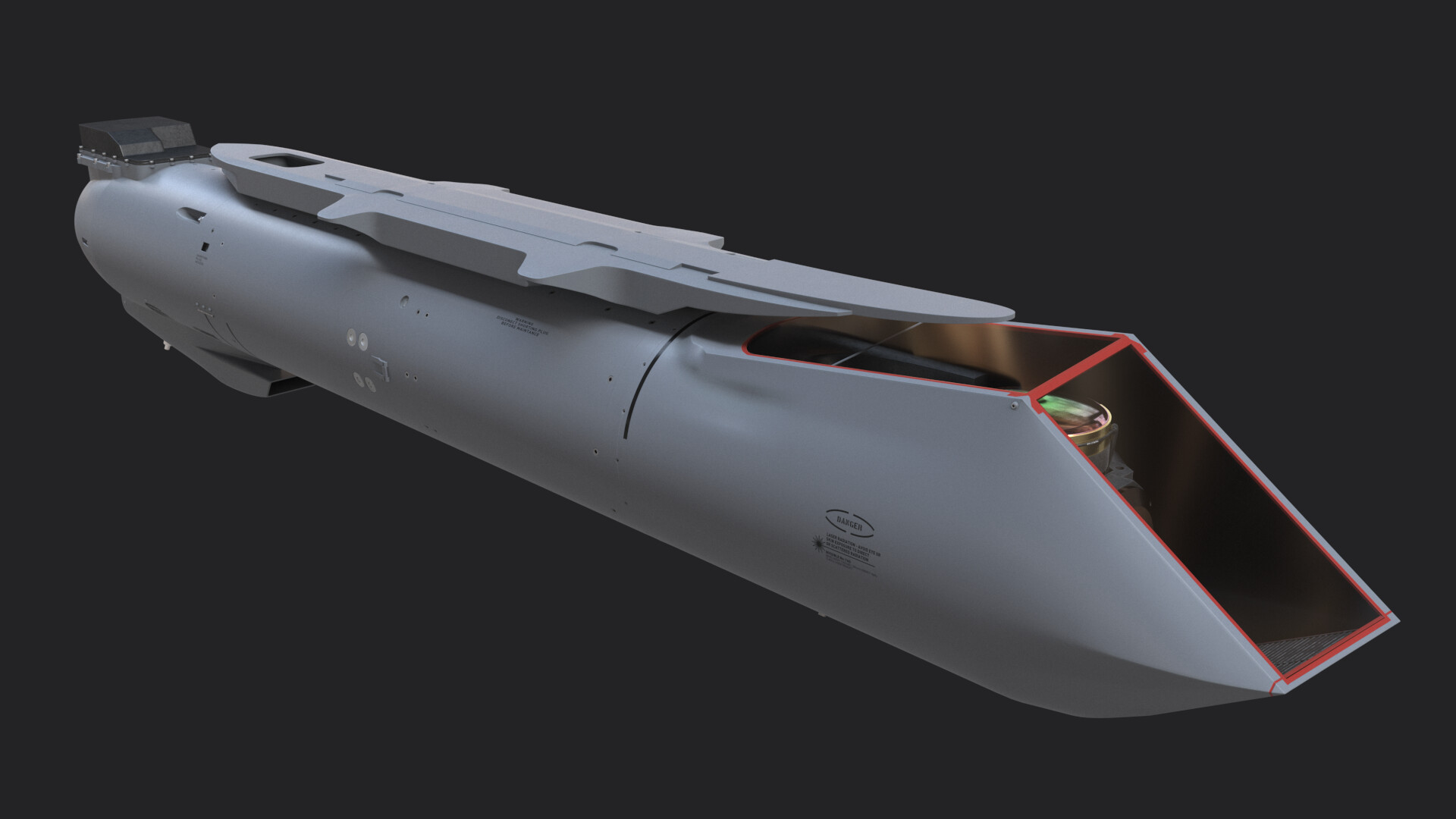
AN/AAQ-33 SNIPER XR TGP
General Info:
Type = Targeting Pod
Origin = U.S.A.
Manufacture = Lockheed Martin
IOC = 2005
Sensor Type = Infrared, Night Navigation/Attack Camera, laser designator and ranging.
Sensor Range = 28nm
Field of View = 60º
Dimensions
Length = N/A
Diameter = N/A
Weight = N/A
The SNIPER TGP incorporates a high definition mid-wave FLIR, dual-mode laser, visible-light HDTV, laser spot tracker, laser marker, video data link, and a digital data recorder. Advanced sensors and image processing incorporating image stabilization enable targets to be identified at ranges which minimize exposure to defensive enemy systems. The dual-mode laser offers an eye-safe mode for urban combat and training operations along with a laser-guided bomb designation laser.
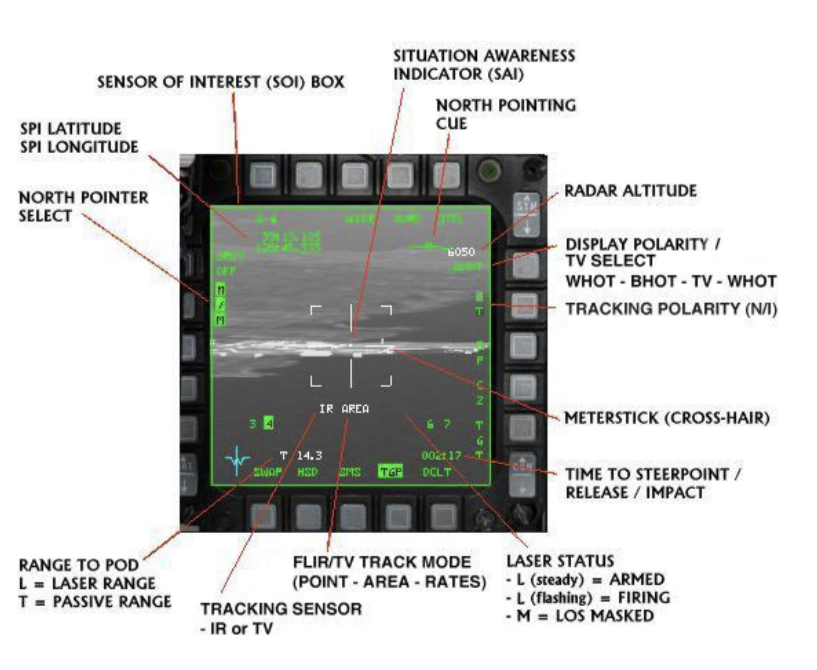
The pod's FLIR allows observation and tracking through smoke and clouds, and in low light / no light conditions. The CCD camera supports the same operations in visible light for most daylight conditions.
For target coordination with ground and air forces, a laser spot tracker, a laser marker, and an HDTV quality video down-link to ground-based controllers supports rapid target detection and identification. The Sniper can also provide high-resolution imagery for non-traditional Intelligence, surveillance and reconnaissance (NTISR) missions without occupying the centerline station on small fighter aircraft, and can maintain surveillance even when the aircraft maneuvers. As a result, a second, dedicated fighter aircraft isn't needed to provide protection to a dedicated ISR aircraft, which many small nations cannot afford.
For ease of maintenance, Sniper's optical bed design, partitioning, and diagnostic capabilities permit two-level maintenance, eliminating costly intermediate-level support. Automated built-in testing allows maintenance personnel to isolate and replace a line replaceable unit in under 20 minutes to restore full mission-capable status.
General Info:
Type = Targeting Pod
Origin = U.S.A.
Manufacture = Lockheed Martin
IOC = 2005
Sensor Type = Infrared, Night Navigation/Attack Camera, laser designator and ranging.
Sensor Range = 28nm
Field of View = 60º
Dimensions
Length = N/A
Diameter = N/A
Weight = N/A
The SNIPER TGP incorporates a high definition mid-wave FLIR, dual-mode laser, visible-light HDTV, laser spot tracker, laser marker, video data link, and a digital data recorder. Advanced sensors and image processing incorporating image stabilization enable targets to be identified at ranges which minimize exposure to defensive enemy systems. The dual-mode laser offers an eye-safe mode for urban combat and training operations along with a laser-guided bomb designation laser.
The pod's FLIR allows observation and tracking through smoke and clouds, and in low light / no light conditions. The CCD camera supports the same operations in visible light for most daylight conditions.
For target coordination with ground and air forces, a laser spot tracker, a laser marker, and an HDTV quality video down-link to ground-based controllers supports rapid target detection and identification. The Sniper can also provide high-resolution imagery for non-traditional Intelligence, surveillance and reconnaissance (NTISR) missions without occupying the centerline station on small fighter aircraft, and can maintain surveillance even when the aircraft maneuvers. As a result, a second, dedicated fighter aircraft isn't needed to provide protection to a dedicated ISR aircraft, which many small nations cannot afford.
For ease of maintenance, Sniper's optical bed design, partitioning, and diagnostic capabilities permit two-level maintenance, eliminating costly intermediate-level support. Automated built-in testing allows maintenance personnel to isolate and replace a line replaceable unit in under 20 minutes to restore full mission-capable status.
Last edited: